

One question for each 2026 World Cup team. If Norway aren’t dark horses, what are they?
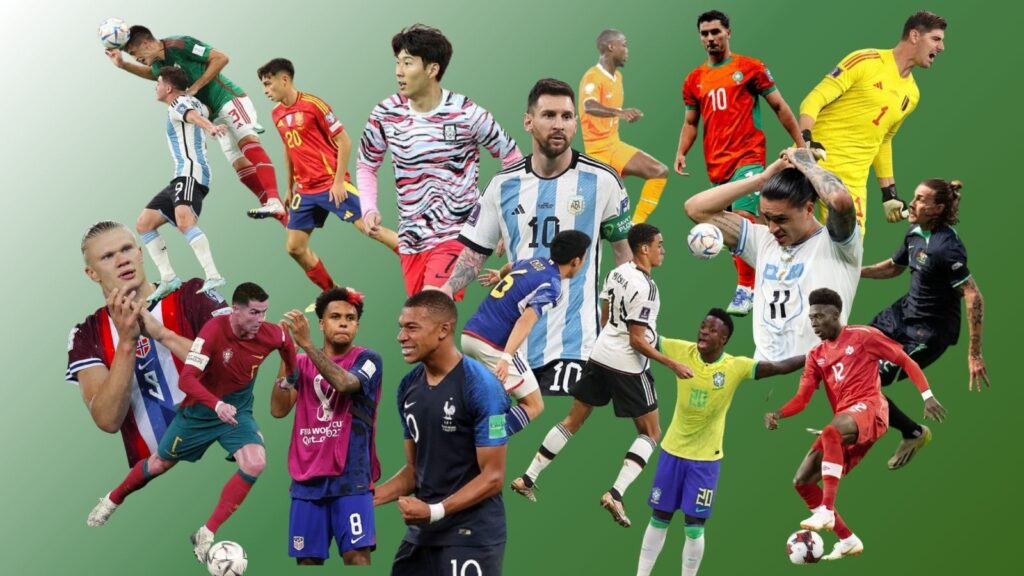
Would you love me in a Bentley? Would you love me on a $95 bus from downtown Boston to Gillette Stadium? Footnote is asking 48 questions, and they’re all about the 48 teams at the 2026 World Cup. This post is part of our Group I preview. You can also read previews of France, Senegal, and Iraq.
If Norway aren’t dark horses, what are they?
The term “dark horse” dates back at least to an 1831 Benjamin Disraeli novel. It’s a cliché that entered the world fully formed: From its first known usage, it meant a surprise winner, an outsider that came out of nowhere to shock everyone.
All this to say, if a team is so well known as a contender with a potential outside shot at winning a tournament that Netflix titles a documentary Norway: The Dark Horse, that team is perhaps not actually a dark horse.
Norway are simply a very good team, but one that should have been very good earlier. Despite having a team built around Martin Ødegaard and Erling Haaland, two of the best players in the world, Norway failed to qualify for the 2022 World Cup and the 2024 Euros.
In the leadup to 2026, things finally clicked. Norway were perfect in qualifying with eight wins from eight games, including two dismantling victories over Italy that felt like symbolic moments that changed the hierarchy of power in the UEFA universe.
Partially the 2026 version of Norway is good because of the depth of talent that has joined Ødegaard and Haaland. Oscar Bobb and Antonio Nusa are talented wingers, Alexander Sørloth would start at striker for most other national teams, and Jens Petter Hauge and Patrick Berg formed the core of the great Champions League underdog stories by leading Bodø/Glimt to the knockout rounds.
But ahead of their respective World Cup debuts, it’s worth lingering on the two north stars in Norway’s constellations, who have taken disparate paths to end up on as the driving forces on a potential World Cup contender.
Haaland’s path has been a little more straightforward. I happened to be in Norway the first time I read the name “Erling Braut Haaland,” which was on the front page of a newspaper in an Oslo grocery store after he had scored nine goals in a U20 World Cup game against Honduras.
From there, the Haaland career trajectory has been very simple. The games get more difficult; Halland still scores goals. He was so dominant with Red Bull Salzburg in Austria that he only played 27 games there before Borussia Dortmund came calling.
In Germany, he scored 86 goals in 89 games. The big step up was supposed to be when he went to Manchester City, but instead he immediately was the top scorer for a treble-winning team and has scored 162 goals in 198 matches in his time in sky blue to date. You’ll never guess who was the top scorer in all of UEFA World Cup qualifying as Norway finally managed to secure a spot at the tournament.1It was Haaland. He scored 16 goals in eight games.
Ødegaard’s path has been a little bit more circuitous. Signing for Real Madrid at just 15, the midfielder was tagged with the kind of “next great hope” expectations that typically are followed by mediocre careers spent in midtable. It didn’t help that Norway was in a distinct downswing in talent at the time, putting extra scrutiny on his big move.
Not to mention Ødegaard was a youth prospect at Real Madrid in the late 2010s, perhaps the least youth prospect-friendly environment in the history of the sport. For Ødegaard to have any shot at first team football, he had to convince a coach to start him over one of five players who had been signed for $100 million. This was the era of the unbreakable midfield trio of Luka Modric, Casemiro, and Toni Kroos and also Isco and also James Rodríguez. There was no space for a Norwegian teenager no matter how promising.
And so Ødegaard spent most of his late teen years in the relative anonymity of the Real Madrid youth system, and then in loan spells in the Netherlands and at Real Sociedad, which are not anonymous by any means but are not exactly starting for Los Blancos.
Ødegaard’s time at Real Sociedad turned the heads of anyone who paid close attention to Spanish football, but it wasn’t until a loan spell and then a permanent transfer to Arsenal that people started saying “Oh hey that Norwegian child from Real Madrid is playing pretty well!”
Now a Premier League champion after six seasons of excellent midfield conducting in England, Ødegaard stands out as a remarkable exception that proves the rule: The overhyped youth phenom come good. Better teenagers have flamed out under less pressure than Ødegaard was under.
And now he has the blessing of being the second biggest star on his national team. Haaland makes the perfect foil for Ødegaard: A relentless goal machine to pair with the more artisanal midfield creator.
This summer, the pair will finally get to play together at a major tournament, leading Norway back to the World Cup for the first time since the 1990s. They lead a team that is poised to shake up the established World Cup powers.
But please: Don’t call them dark horses.
Leave a Reply