

One question for each 2026 World Cup team. Tunisia have been constantly pretty good for 10 years. Does anyone notice?
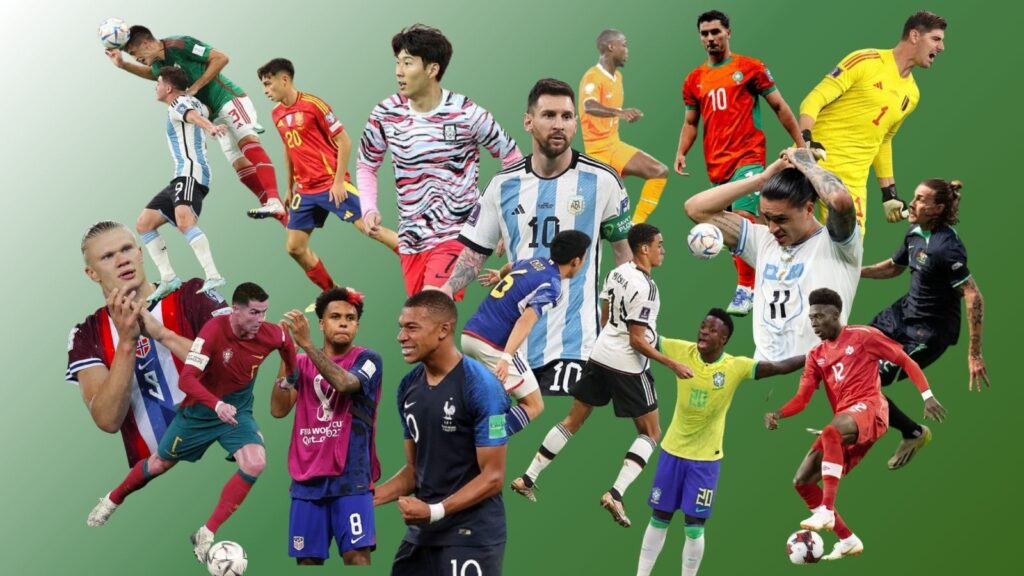
Would you love me in a Bentley? Would you love me on a $95 bus from downtown Boston to Gillette Stadium? Footnote is asking 48 questions, and they’re all about the 48 teams at the 2026 World Cup. This post is part of our Group F preview. You can also read previews of the Netherlands, Japan, and Sweden.
Tunisia have been constantly pretty good for 10 years. Does anyone notice?
There aren’t a ton of Tunisian star soccer player. Or at least there aren’t a ton of Tunisian players who are stars outside of Tunisia. Probably the best known Tunisian players of this century are journeymen striker Wahbi Khazri and Manchester United youth product Hannibal Mejbri. Rani Khedira has had a solid career in the Bundesliga, but he is probably best known as the younger brother of Sami, a key player in Germany’s 2014 World Cup winning squad.
On one level this all makes sense: Tunisia is the smallest North African nation by both physical area and population. There are just under 12 million people living in Tunisia, and it’s rare that a country that small consistently produces lots of top-level soccer players.
On the other hand, Tunisia have been consistently good for the last 10 years, despite not having any names that jump off the page to the European soccer-watching audience.
This summer, Tunisia will compete at their third consecutive World Cup. Qualifying for 2026, is impressive enough, but the back-to-back qualifications in 2018 and 2022 were even more so. When the tournament was still 32 teams, CAF qualification was bloodsport, a brutal three-stage process of narrowing 54 member nations down to just five teams. There was no room for error in the old African qualifying format, which is why every cycle at least one major team from the continent like Egypt, Nigeria, Ghana, or Algeria would fail to qualify.
In that context, Tunisia making themselves World Cup fixtures is a feat. Even in a more forgiving format for 2026, they qualified comfortably, winning their group by a margin of 13 points without conceding a single goal.
So you might not realize it, but Tunisia are deeply competent team. Can they take their consistent performances in Africa and apply them to the world stage?
A lot will depend on the defensive midfield pairing of Khedira, who only just switched over from Germany in February of this year, and team captain Ellyes Skhiri. Both players are veteran midfield battlers, the kind of competitive protective cover that can at the very least disrupt opposing teams, if not create chances to go the other way.
And as much as it is valuable to have stars from prestigious clubs, they also have a sort of club experience that might be more relevant to how Tunisia approach the tournament. Between them, Khedira and Shkiri have played around 450 games over the past decade for hard-to-beat midtable Bundesliga teams. Khedira with Augsburg and Union Berlin, Shkiri with Köln and Eintracht Frankfurt. In games against teams with more top-line talent, they both have plenty of experience keeping a side organized against the ball.
Early signs are that Khedira and Shkiri are going to form a partnership that can build on Tunisia’s strong defensive record from qualifying. Take this with a grain of salt because the only two games he has played with Tunisia were against Haiti and Canada, but Khedira is yet to concede a goal with his new national team.
Outside of a solid, combative midfield, Tunisia will have to find ways to score. Over the past two years, Tunisia have struggled to put the ball in the net against good teams: They were held scoreless in a friendly against Morocco last June, and were eliminated from AFCON this January after being unable to notch more than one goal against Mali in the round of 16.
More to the point, there isn’t a single player on the Tunisia roster for the World Cup with more than six international goals.
But if you’re interested in getting excited about young players who may or may not pan out as prospects, there are two players in the squad who might become the big-name players in Europe that Tunisia has been lacking.
Khalil Ayari is a winger who broke through in Tunisia at a young age, and now finds himself in the Paris Saint-Germain academy, one of the great incubators of talent of recent years. Attacking midfielder Ismaël Gharbi is also a PSG product, who had a down season this past year but put together an impressive first year with Braga in Portugal at just 20 years old.
Tunisia are unheralded, and they are more than likely not going to be the most exciting team at the tournament. But they have a solid core, and are a prototypical hard-to-beat team.
If they can defend the way that they did in qualifying in the World Cup propper, they only need so many bounces to go their way before Tunisia transforms from the competent side that no one has heard of into one that is playing knockout stage football.
Leave a Reply