

One question for each 2026 World Cup team. Can the USMNT team beat a team that is better than them, and will anyone be normal about it?
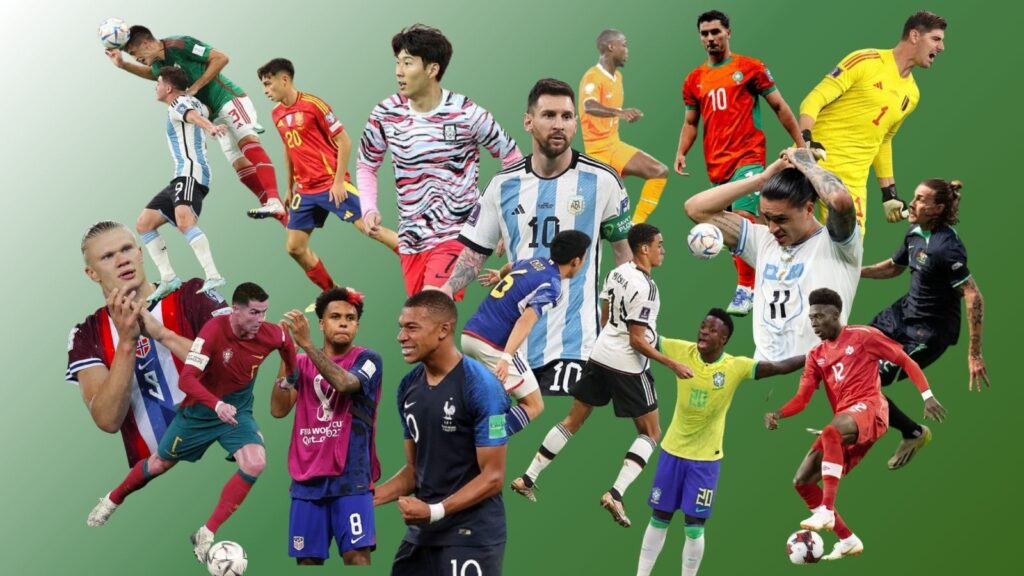
Would you love me in a Bentley? Would you love me on a $95 bus from downtown Boston to Gillette Stadium? Footnote is asking 48 questions, and they’re all about the 48 teams at the 2026 World Cup. This post is part of our Group D preview. You can also read previews of Australia, Paraguay, and Turkiye.
Can the USMNT team beat a team that is better than them, and will anyone be normal about it?
Over the past decade, both everything and nothing has changed for the United States men’s national team.
On the one hand: The 2026 version of the USMNT is exactly the kind of pretty good team that has had for the entire 21st century.
After emerging from the international soccer wilderness in the mid-1990s, the States settled into a solid place in the sport’s middle class. Players like Brian McBride and Claudio Reyna and then DaMarcus Beasley and Landon Donovan and Clint Dempsey helped the team establish itself as something like the 15th best squad in the world on a consistent basis.
And if you just look at snapshots from, say 2010, and now it would seem that the team is in just about the same place. The USMNT is ranked 16th in the world and consistently beating teams that are ranked lower than them, like Australia or Japan, while generally losing to those ranked in the top 10 like Belgium or Portugal.
But also, everything has changed for the USMNT since the days of McBride and Donovan.
First, the dead zone and the nadir: A dead zone in the mid-2010s in which almost no Americans were playing top-level soccer in Europe and ultimately a spectacular failure to qualify for the 2018 World Cup.
Then the renaissance. Out of the wreckage of 2017 emerged the largest cohorts of European-based talent in the history of the USMNT: Christian Pulisic, Weston McKennie, Tyler Adams, Tim Weah Sergino Dest, Antonee Robinson, Chris Richards, Giovanni Reyna, and on and on and on.
After a respectable showing at the 2022 World Cup — particularly for one of the least experienced squads at the tournament — USMNT fans largely assumed that the team was on an unstoppable growth trajectory. Finally the team had a core of elite players. Finally the United States would have a legitimate, elite national team.
Instead, they got four years of growing pains: A nasty scandal involving Reyna’s family and the family of on-again-off-again coach Gregg Berhalter, a flameout at the 2024 Copa America, several false starts followed by reality checks under current coach Mauricio Pochettino.
The cottage industry of USMNT hot takes on the internet, obsessed largely with things like hating Berhalter, conspiracy theories involving MLS, and tracking the performance of American players in Europe did not react well to this period. Every win was evidence that it was finally all clicking; every loss was a sign that the players were soft or the coaches were incompetent or the fans and the media needed to apply pressure to the team the way Europeans do.
But despite all the talent and all the tantrums, the USMNT is about exactly where they were in 2010: Something like the 15th best team in the world.1Ranked 16 in the FIFA World Rankings at time of writing. In the past year, they mostly beat teams ranked below them — Japan, Uruguay, Australia — and mostly lost to teams above them — Belgium, Portugal.
Should we expect them to be better than that? Possibly.
Pulisic has been arguably the best player in Serie A for monthslong stretches since he arrived at Milan in 2023, and McKennie has slowly but surely become one of the only things holding Juventus together.
The ceiling of the 2026 squad should also be higher than 2022 purely through the addition of Folarin Balogun, probably the first Champions League-calibre center forward to ever play for the USMNT. After an injury-shortened second season at Monaco, Balogun hit his stride in the second half this campaign with 19 goals and four assists across 43 matches in all competitions.
On the other hand maybe not: Many of the heightened expectations around the USMNT stem from how much more impressive these player’s club careers are when you compare them to past American players. And that’s undoubtedly true.
But if you compare the current USMNT roster to their competition, is it fair to assume that they should be a top 10 national team? Probably not.
If you look at the likely starting 11s of France, England, Germany, Brazil, Portugal or arguably even Switzerland or Morocco, it’s hard to find more than a handful of spots where an American player would definitively be an upgrade. The talent level of the USMNT is much higher than it’s ever been, but it’s also still lower than that of most elite national teams.
So the USMNT dives once more into the breach: A World Cup where success will be defined by the ability to beat teams that are more talented than them.
Despite the pre-tournamenty hype machine largely focussing on Pulisic, their ability to steal a game or two will largely come down to how much his teammates can create for him. While Pulisic emerged as a teenage sensation with quick-trigger dribbling reflexes, his mid-20s have been much more about play inside the penalty box. He is most elite as a box arriver, collecting the ball in the penalty box to finish chances or play a final pass.
What that means for the USMNT is that success will come down to how consistently McKennie and Balogun and possibly Gio Reyna2“Possibly Gio Reyna” is the greatest USMNT player of the last decade. Actual Gio Reyna can’t stay healthy for more than two months consecutively. can get the ball to Pulisic in those areas, and how well Tyler Adams and Chris Richards and the reanimated ghost of Tim Ream can stop more talented teams from generating and scoring chances.
In other words, this will be a USMNT World Cup largely defined by the same factors that have defined every USMNT World Cup of this century. Whether or not the wider American soccer-watching community is ready to accept that, however, is another question entirely.
Leave a Reply