

One question for each 2026 World Cup team. Will Curaçao, the smallest nation in World Cup history, do more than just make up the numbers?
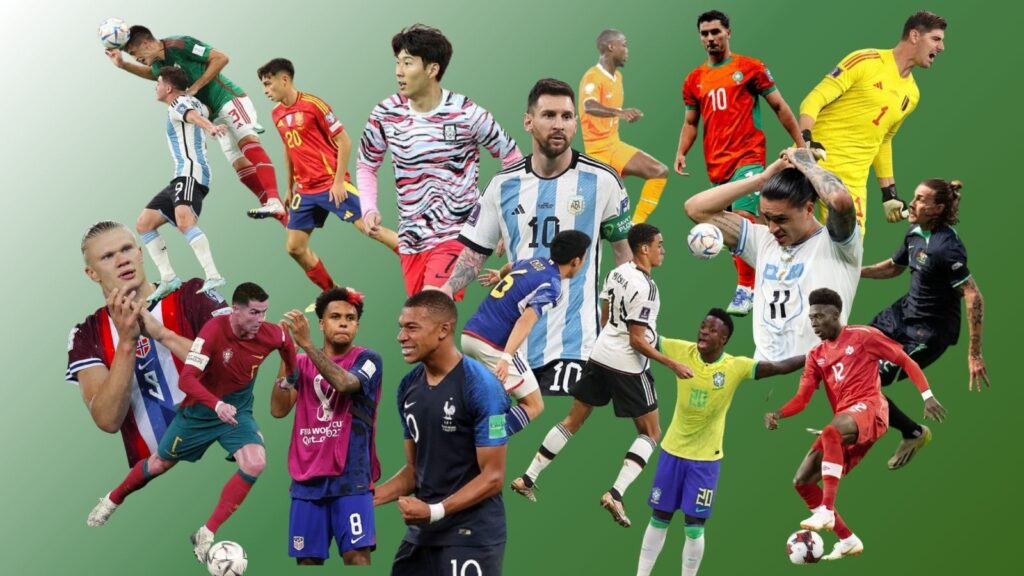
Would you love me in a Bentley? Would you love me on a $95 bus from downtown Boston to Gillette Stadium? Footnote is asking 48 questions, and they’re all about the 48 teams at the 2026 World Cup. This post is part of our Group E preview. You can also read previews of Ivory Coast, Germany, and Ecuador.
Curaçao is a tiny island nation off the coast of South America. A little under 200 square miles altogether, it is inhabited by 155,826 people who speak a combination of Dutch, English and mostly Papiamento, a Portuguese-based Creole language spoken almost exclusively in the Dutch Caribbean.
If you know about Curaçao at all, you probably know about it as a major base for Shell oil or you know about the eponymous liqueur that is frequently used to create colorful cocktails.1Or if you’re a real baseball freak, you might have heard of it as the place where former Yankees shortstop Didi Gregorius grew up.
But this World Cup, you will start to know about Curaçao as the smallest nation to ever qualify for the tournament, a fact that you will probably hear constantly in pre-game television segments over the next several weeks.
Curaçao’s qualification is a product of the expanded field and the three biggest forces in Concacaf auto-qualifying by virtue of being hosts, but it’s also something that has been foreseeable, or at least conceivable, for a long time.2But technically not that long of a time because Curaçao only recently started competing as an independent nation in 2011 after the dissolution of the Netherlands Antilles as a political entity.
By virtue of still technically being integrated into the Netherlands as a political entity, lots of Curaçaoans live in places like Amsterdam and Rotterdam. There are, in fact, roughly as many Curaçaoans in the Netherlands as there are back in Curaçao.
This means that compared to other small Caribbean nations, Curaçao have access to many more players who are developed in elite European academies.3This is even more true for Surinaime, who fell at the final hurdle in their quest to qualify for this year’s World Cup. There are a ton of Surinamese people in the Netherlands, and the Dutch lineup this summer is likely to feature tons of players who could have also represented Suriname through their parents, including Virgil van Dijk, Donyell Malen, Ryan Gravenberch, and Denzel Dumfries. The thinking has always been that if Curaçao could successfully recruit more of those Dutch-based players, they would be good enough to compete in Concacaf and maybe beyond.
The first signs of potential success came in 2019, when Curaçao qualified for the Gold Cup and made a run to the quarterfinals. That tournament was mostly known for goalkeeper Eloy Room’s heroics against the United States, a performance that almost single-handedly broke him out of an extended non-playing purgatory at PSV and earned him a contract with the Columbus Crew.
Curaçao then came closer than ever to qualifying for the 2022 World Cup, narrowly losing a two-leg playoff to Panama which would have earned them a spot in the eight-team final table and at least given them the opportunity to compete regularly against teams like Mexico and Canada and the United States.
Without the big North American teams in the way, and in a weird decentralized Concacaf qualifying format for 2026, the Blue Wave were able to qualify fairly comfortably for 2026. A 0-0 draw in Jamaica sealed their spot at the tournament, and their status as the answer to the trivia question about the smallest nation ever to compete.
But how competitive will they be? Much like their fellow Caribbean representatives Haiti, Curaçao’s roster runs the full spectrum of global talent, from players who play for teams like Miami FC in USL to players with legitimate Premier League experience.
Someone who fits both those categories is Jürgen Locadia, the team’s starting number nine. Locadia came through at PSV before a brief stint with Brighton in the Premier League. His subsequent career has taken him to Germany, Iran, China, and finally South Florida. His young promise never quite clicked into place, but he is a reliable veteran presence.
The other key European-based players on the Curaçao made the switch over from the Netherlands at younger ages than Locadia did. Tahith Chong was a much-hyped prospect at Manchester United, but has panned out to be more of a Championship-level player thus far. Born and raised in Curaçao, he switched back to play for the country of his birth last year after playing for Dutch teams up to the U21 level.
The other key young players for the Blue Wave are midfielder Livano Comenencia and winger Sontje Hansen, producers of the Ajax and PSV academies, respectively.
As if a small island nation qualifying for a first World Cup wasn’t enough, the feel-good factor is compounded by their coach. Dick Advocaat is the ultimate journeyman manager: He has managed nine separate national teams, including coaching the Netherlands women once and the Dutch men’s side on three separate occasions.
Advocaat took the Curaçao job in 2024, leading the team through that historic qualifying campaign. But shortly after Curaçao secured their ticket to the World Cup, he was forced to step down to help his daughter through a health emergency. Then, with his daughter’s health reportedly improved, the 78-year-old Dutchman returned to the helm earlier this month. Advocaat has been part of the color of world football for half a century, and seeing him coach at a World Cup will be a great capstone to a one-of-a-kind career.
Curaçao will create a great story the second that they kick off against Germany June 14. A decade ago, the idea that they could even be playing against Germany in a competitive game seemed like a pipe dream.
This is a team full of players who took the long way to the World Cup, and they will be desperate to create a perhaps once-in-a-lifetime moment by scoring a goal or even taking points off of one of the big teams in the group.
They probably don’t have the talent to impact the knockout rounds, but they might be able to scrap together enough to be more than the answer to a trivia question.
Leave a Reply