

One question for each 2026 World Cup team. Can Morocco speak to your manager?
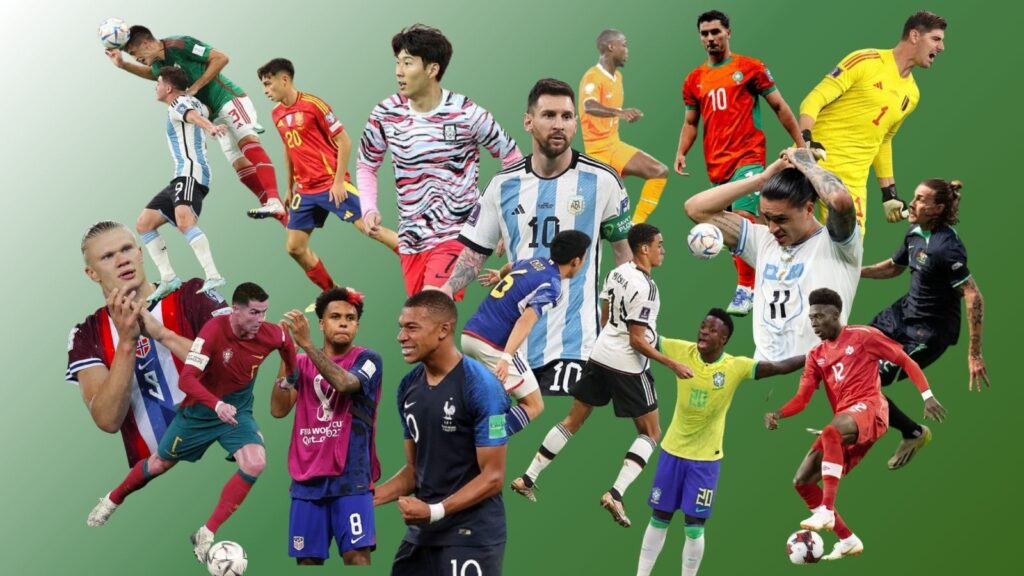
Would you love me in a Bentley? Would you love me on a $95 bus from downtown Boston to Gillette Stadium? Footnote is asking 48 questions, and they’re all about the 48 teams at the 2026 World Cup. This post is part of our Group C preview. You can also read previews of Brazil, Haiti, and Scotland.
Can Morocco speak to your manager?
The 2020s were supposed to go down as the decade that it finally all came together for Morocco as a soccer power.
The North African country has long been a hotbed for the sport, but over the course of the 2000s, a combination of domestic investment and savvy dual-national recruitment created a regional and then gradually global powerhouse.
In 2009, Morocco opened the Mohammed VI Football Academy, a youth development facility and training program purpose-built to turn soccer-obsessed young Moroccans into top-level soccer players. That academy turned out stars such as Youssef En-Nesyrif, who alongside European Moroccan stars like Achraf Hakimi and Hakim Ziyech formed the backbone of a historic 2022 team that became the first African team to reach a World Cup semifinal.
That sporting triumph was soon followed by an administrative one: In 2024, FIFA selected Morocco to cohost the 2030 World Cup along with Spain and Portugal, ending a 30 year quest to bring the World Cup to North Africa.1And also Argentina, Uruguay, and Paraguay, for reasons that are somehow both admirably sentimental and remarkably corrupt, even by FIFA’s standards
Then, 2025 brought the Africa Cup of Nations to Morocco, an event that was in part meant to preview the hyper-modern stadium upgrades that were in the process for 2030. This is where Morocco’s reputation starts to turn.
They were comfortably one of the best teams at the tournament, with much of the 2022 core still intact and the addition of Brahim Díaz, who had seriously considered playing for Spain for a long time before finally committing to Morocco.
Then the final against Senegal, which for 90 minutes was a pretty normal game, and then for 10 minutes became one of the most insane sporting events in recent memory.
First Senegal were denied what seemed to be a winning goal after a very soft foul on a corner kick. Then, Morocco were awarded a penalty on an equally soft-seeming foul at the other end.
You are probably aware of what happened next: Senegal left the field in protest, but eventually returned. Diaz inexplicably attempted a panenka when he finally took the penalty, and Senegal eventually won in extra time.
Then, after nearly two months of deliberations, Morocco were declared champions, based on CAF’s interpretation that Senegal had in fact forfeited the match when they left the field.
Now, if we’re being generous, you can see why CAF made the decision. First, it is probably the correct interpretation of the rules, and the decision that should have been made when Senegal stormed off the field. Second, if you’re in the business of administering international tournaments, you don’t want to set the precedent that a team that is sufficiently mad about the refereeing can derail a final.
But — and this is the key point here — come on. Particularly after the refereeing in the final itself seemed so generous to Morocco, awarding them the title via a press release two months after the fact felt incredibly lame at the least, and unjust at the most. It undercuts the legitimacy of the tournament, and makes CAF look like a haphazard organization.
The best thing would have been for Senegal not to leave the field. The second best thing would have been for Senegal to face the appropriate consequences in the moment that it happened. The third best thing would have been to let the result stand, and to levy heavy suspensions and fines against Senegal. Declaring Morocco champions belatedly is the fourth best outcome, and the fourth best outcome by some distance.
And so this puts Morocco in a weird position heading into the World Cup: Certainly talented, and technically reigning African champions, but having shed their 2022 underdog persona for something a little less universally lovable.
Will this matter for how they actually perform at the World Cup?
Probably not, but international soccer can be a weird chemistry in which the vibes within and around a team truly matter. In 2022, the vibes around Morocco were undeniably good.2They did fire their coach like five months before the World Cup, but the vibes at the tournament were good. It was a squad that clearly relished believing in each other even when some assumed they were third best in their own group, and then felt a deep motivation from taking up the mantle of Africa and the wider Arab world as their run continued into the quarterfinals.
In 2026, they are the team that just complained their way to continental championship and are on the wider world’s radar as a reigning semifinalist.
Morocco’s success in 2026 will hinge mostly on how successfully Diaz and Hakimi and other stars like Abde Ezzalzouli and Ismael Saibari mesh together on the field. But it will also come down to how successfully the team can move on from the mess of the AFCON final and turn the wider negative attention into some sort of “us against the world” motivation.
And if that doesn’t work, there’s always the appeals process.
Leave a Reply