
One question for each 2026 World Cup team. Can Marcelo Bielsa’s shit work for Uruguay in the playoffs?
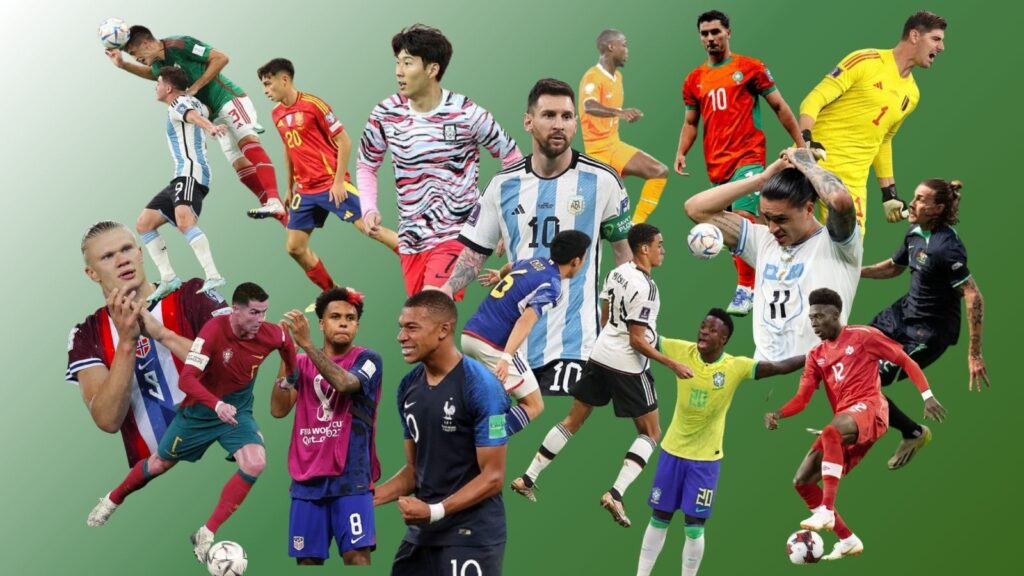
Would you love me in a Bentley? Would you love me on a $95 bus from downtown Boston to Gillette Stadium? Footnote is asking 48 questions, and they’re all about the 48 teams at the 2026 World Cup. This post is part of our Group G preview. You can also read previews of Cape Verde, Saudi Arabia and Spain.
Can Marcelo Bielsa’s shit work for Uruguay in the playoffs?
Marcelo Bielsa and Billy Beane are not the same person, but there are parallels.
Beane, the longtime Oakland Athletics general manager and subject of the book Moneyball, is known as the conduit through which the analytics revolution entered baseball and then sports in general. Beane was the first person in a position of power in baseball to open his mind to a new way of thinking about batting and fielding through statistics, and in doing so he helped change the relationship between numbers and sports forever.
The As, famously, never won anything under Beane except for a couple of AL West divisional titles. Beane’s approach maximized marginal gains from the As limited budget over the course of 162 games, but Oakland inevitably fell short in the more compressed, more random postseason.
“My shit doesn’t work in the playoffs,” Beane says close to the end of Moneyball.
Unlike Beane, Marcello Bielsa is not responsible for a statistical revolution in soccer. But he matches Beane in terms of individual influence. Like Beane, almost singlehandedly changed the way one of the world’s oldest and most popular sports is played. Like Beane, he is also someone whose shit has frequently not worked in the playoffs.1Okay, mostly there aren’t playoffs in soccer, but I’m trying to keep the symmetrical language going here.
Emerging as a coach in Argentina in the early 1990s, Bielsa’s first great innovation was a sort of synthesis between the warring schools of thought in Argentinian football: the win-at-all-costs football of fine margins occasional violence associated Carlos Bilardo and the more free flowing, expressive soccer associated with César Luis Menotti.
Bielsa created a style of play that was defined by both possession-based attacking and maniacal pressing. His teams worked incredibly hard to compress the field and win the ball back, and then moved the ball quickly and incisively when they had it.
It was Bielsa’s particular combination of pressing and passing and passing and pressing that helped invent the way soccer is played. At one point or another everyone from Diego Simeone to Pep Guardiola has cited Bielsa as a defining influence on their coaching.
The most Beanian impact that Bielsa had on soccer was how he changed what teams do between matchdays. He is as influential for how his teams prepared as how they played. He was among the first coaches to truly systematize training, putting an emphasis on not only fitness but on separating positional groups for specific technical practice.
He also helped to invent the kind of meticulous preparation and video work that defines modern coaches like Mikel Arteta and Thomas Tuchel. Bielsa keeps hours and hours of tape on individual players, his teams, and potential opponents. His dedication to gathering and analyzing information on his opponents is so immense that after his Leeds team were accused of spying on Derby County ahead of crucial game in 2019, Bielsa held a presentation about his preparation process in which he demonstrated such a level of knowledge about practically every single opposing side in the league that the wider English football community basically said “Yeah, I guess it’s fine.”
All of these legendary Bielsa idiosyncrasies have transformed how football is played. But in terms of championships, the results have been limited. Bielsa has done his best work helping a relatively under-resourced team overperform through the power of overpreparation.
Frequently, this means he does not win trophies, particularly in the more compressed, more random world of international soccer. He was a transformative coach for Argentina, but his six years there only brought an Olympic winners medal and a loss in the Copa America finals. Similarly, he is revered for his stretch at the helm of Chile, who returned to the World Cup under his guidance but only reached their late 2010s peak after he left.
Heading into the tournament, it seems like anything is on the table for his Uruguay team. Bielsa’s side started World Cup qualifying in the fall of 2023 in great form, including back-to-back wins over Brazil and Argentina. They also had an impressive run at the Copa America, only missing out the final on a single Jefferson Lerma goal off a Colombian corner kick.
But then, Uruguay fizzled out a little bit in their qualification campaign: After those impressive results to start, they ended up in the mess of four teams tied for third place, one point behind Ecuador and 10 behind Argentina. They have also thrown in some uninspiring performances and odd results in late 2025 and early 2026, including a bizarre 5-1 friendly loss to the United States.
Still, Uruguay are a tremendously talented team, and in Federico Valverde have perhaps the platonic ideal of a Bielsa player. A nonstop midfield irritant, Valverde is the kind of tireless, position-agnostic player that thrives in Bielsa’s system, someone who can chase the ball forever and then use it effectively once he wins it back. He is not a prolific goalscorer but he has a well-earned reputation for being able to hit the ball like he’s in Mario Super Strikers and recently scored an astoundingly good hat-trick to eliminate Manchester City from the Champions League.2Valverde also was recently involved in one of the most bizarre locker room soap operas in recent European football memory, allegedly irritating his Real Madrid teammate Aurélien Tchouaméni so much over the course of a two days that the French player punched Valverde hard enough that the Uruguayan fell, hit his head, and was briefly knocked unconscious. It is unclear how — if at all — this will affect Uruguay at the World Cup, but it feels like worth mentioning.
Valverde will likely be the key player, but the real on-the-field variables for Uruguay will be the performance of the wild card players in front of and behind him: José María Giménez in defence and Darwin Núñez in attack.
Giménez really should be the best center back in the world. Athletic, tough, and decent on the ball, Giménez signed for Atletico Madrid as a teenager with hopes that he would be a clean replacement for the club’s aging Uruguayan legend Diego Godín. Instead, Giménez has been perennially injured, never able to make more than 30 league appearances in a season and only managing 2,000 minutes four times across 13 seasons.
A healthy Giménez can be the difference between an elite Uruguay defense and one that is simply very good.
Darwin, meanwhile is a true wild card footballer, a truly chaotic striker who couldn’t go 20 minutes during his stretch at Liverpool without either a truly perplexing miss or stunning goal. Núñez had a relatively quiet season in Saudi Arabia, but managed 0.72 goals and assists per 90 minutes, indicating that he is still capable of making things happen.
If Bielsa’s system points the Darwin Núñez tornado in the correct direction, it’s entirely possible that he wins the Golden Boot.
Or maybe the combination of Bielsa’s boom-and-bust managerial career and Uruguay’s boom-or-bust player pool will both hit a downswing at the same time.
But Uruguay have a talented team, one of the best coaches in the history of world football, and as Billy Beane would tell you, sometimes winning means doing everything right before the bright lights go on and hoping this time you finally get lucky
Leave a Reply