

Our team-by-team preview starts with the co-hosts. Is the quinto partido still the dream if it’s just the round of 16?
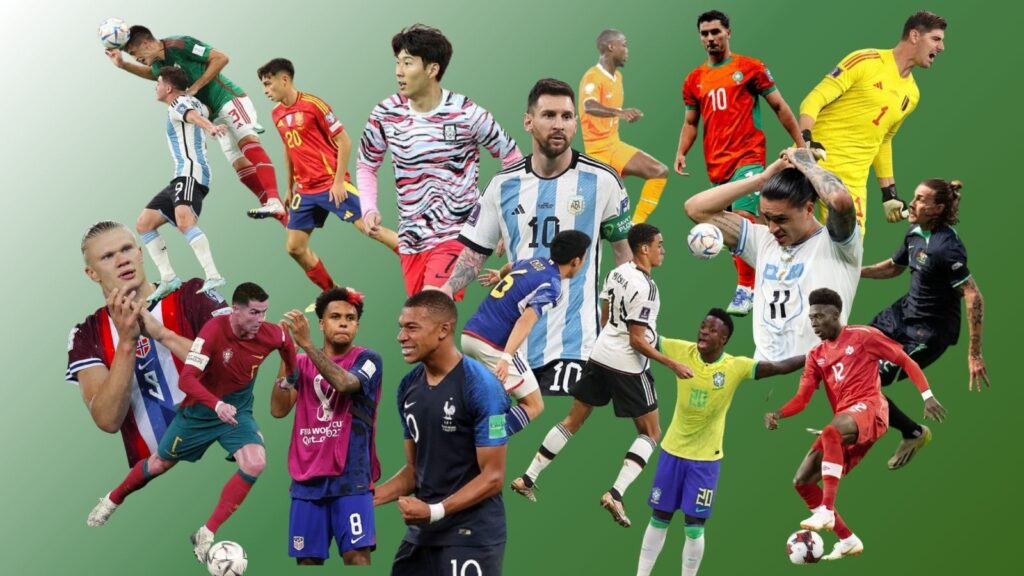
The 2026 World Cup kicks off in just over a month. It promises to be the Biggest Event In The History Of The Tournament, which is inarguably true if you measure by the number of teams.
The latest edition of the greatest spectacle in global sports is in many ways unprecedented, bringing with it a number of questions: Is 48 teams too many teams? Does FIFA think of Americans as human beings or meatbags with credit cards? Is a nation hosting the World Cup allowed to bomb another World Cup participant with no repercussions?1Yes; meatbags; evidently yes.
On the field, the tournament brings just as many questions, with 48 teams and more than 1,200 players carrying with them still more storylines and narratives that will play out across 104 matches this summer.
We’re previewing the tournament with one defining question for each team at the 2026 World Cup, starting with the co-hosts Mexico. For the rest of Group A, read previews for Czechia, South Africa, and South Korea.
Is the quinto partido still the dream if it’s just the round of 16?
The quinto partido — the “fifth match” — is the great white whale of Mexican men’s soccer. For three decades, Mexico was a remarkably consistent World Cup presence. Between 1994 and 2018, Mexico advanced past the group stage at every World Cup, but no further.
Each tournament, the round of 16 brought a new, uniquely painful way to not make it to the quarterfinal: an Arjen Robben dive in 2014, a missed offside call on Carlos Tevez in 2010, Rafa Marquez headbutting Cobi Jones in the chest in 2002.
Despite always being at the World Cup and always being reasonably close to making it to the quarterfinals, Mexico still haven’t made it to the quinto partido since they last hosted the World Cup in 1986.
And so that elusive fifth match became a ghost for Mexican soccer to chase. It got to the point where ahead of the 2018 World Cup, several of the team’s stars publicly stated that they weren’t singularly obsessed with the quinto partido but rather with going as far as they could in the tournament, in a way that sounded suspiciously like they were all singularly obsessed with the quinto partido.
They come into the 2026 tournament on the back of a monkey’s paw version of wishing to not just get eliminated in the round of 16 again in 2022: A slow-motion disaster at the Qatar World Cup saw Mexico gradually give up over the course of three World Cup games, a collapse capped off by a depressing stoppage time Saudi Arabia goal that confirmed Mexico’s narrow elimination.
But 2026 finds Mexico on a relative upswing, thanks in large part to the reestablishment of a very old player and the emergence of two very young players.
First the old: Striker Raul Jimenez is back to somewhere near his best after a horrific head injury put his career in jeopardy for a long stretch of the 2020s. Unable to make a significant impact on the Qatar World Cup, the 34-year-old is heading into his likely last major tournament with nine goals and three assists in the Premier League this year, after as strong 2024-25 season with Fulham.
Then the young: The teenage midfielder Gilberto Mora emerged for Tijuana last year as a genuine world football sensation, the kind of preternatural talent that stereotypically comes out of Spanish academies. He was arguably the key player for Mexico as they reclaimed the Gold Cup last year, and despite an injury-plagued 2026 promises to be a star for El Tri this summer.
Alongside Mora is Obed Vargas, one of the great unlikely success stories of American soccer player development. Vargas grew up in Alaska where, despite being isolated from much of the soccer world, he managed to attract the attention of the Seattle Sounders as well as both the United States and Mexico youth setups. After making nearly 100 appearances for Seattle as a teenager, Vargas moved to Atletico Madrid this January. A skilled and intelligent midfielder, Vargas chose to represent Mexico on the international stage, and is currently the only Alaskan ever to represent any international side.
The signs point to Mexico at the very least getting back to their 1994-2018 baseline. In addition to a promising squad, they are hosting, and hosts almost always make it to the knockout stages. Given the expanded tournament, they also have a chance to be playing a relatively weak team in the round of 32 should they advance.
Which brings us back to the question of the fifth match: Mexico are reasonably good, but can they beat a top-15 team in the world.
The point of the quinto partido myth isn’t that Mexican fans want to watch more Mexico World Cup games, though I’m sure that’s part of it. The point is the decades of frustration that come with hitting a wall at the same point year after year.
So if Mexico make it to a fifth match, but that fifth match is still just the round of 16, have they really conquered the quinto partido? Or do they have to at least match the 1986 team?
For a team in transition, the answer is a likely a little bit of both. Now that the fifth game is the round of 16, this Mexico squad needs to at least meet that elussive goal, and they have to perform well in that game.
Otherwise, the weight will fall on to Vargas and Mora’s generation much sooner than planned.
Leave a Reply